
Peptides
 Exploring the Multifaceted Roles of the LL 37 Peptide in Antimicrobial Research
Disclaimer: Products sold by Wholesale Peptide, is intended as a research chemical only. This designation allows the use of This chemical strictly for In-vitro laboratory testing and experimentation. No other uses or purposes are permitted. All information provided on this website is for educational purposes and has been compiled from multiple sources believed to be accurate. Human or animal use of this product is strictly forbidden by law. This product is not a drug, food or cosmetic and may not be misbranded, mislabeled or misused as such. Anyone not adhering to these terms will be blacklisted and forbidden from purchasing.
In this article, we’ll delve into its origins, structure, and how it works to protect the body, as well as its potential research applications.
Key Takeaways
Introduction to Antimicrobial Peptides
These peptides are found across virtually all living organisms, from plants and insects to humans, highlighting their evolutionary importance.
Understanding the structure-function relationships of these peptides, their regulation, and interactions with both pathogens and host cells is essential for harnessing their full potential in medicine.

LL 37, also known as hCAP18, is a prominent member of the human cathelicidin family, playing a critical role in the body’s first line of defense against infections. As we delve into the specifics of LL 37, it’s essential to note that all products sold by us are strictly for laboratory research purposes and not for any other use.
Knowing the origin and structure of LL 37 helps in appreciating its function and potential applications. This peptide is encoded by the CAMP gene located on chromosome 3 and is derived from the C-terminal region of the human cationic antimicrobial protein (hCAP).
Origin and Structure
LL 37’s origin traces back to the human cationic antimicrobial protein (hCAP), specifically encoded by the CAMP gene on chromosome 3.
The peptide exhibits a distinct distribution of hydrophobic and hydrophilic residues, contributing to its amphipathic nature. This distribution is pivotal for its ability to interact with bacterial membranes.
Most cathelicidins, including LL 37, are linear peptides with 23-37 amino acid residues that form amphipathic alpha-helices.
This disruption occurs through interactions with negatively charged bacterial lipids such as lipoteichoic acid (LTA) and lipopolysaccharide (LPS), which facilitate the peptide’s attachment to the cell surface components, including LPS and membrane proteins. LL-37’s interaction with bacterial membranes can lead to bacterial lysis through pore formation and membrane permeabilization.
This multifaceted approach underscores the peptide’s versatility and potential in combating bacterial infections.
Expression and Regulation of LL-37 in Human Cells
The expression of LL-37 is tightly regulated by various factors, including the presence of microorganisms, cytokines, and other immune molecules.
LL-37 is initially produced as a precursor protein known as hCAP-18. This precursor undergoes proteolytic degradation to form the mature LL-37 peptide, which is then secreted into the extracellular environment where it can interact with and neutralize microorganisms.
The regulation of LL-37 expression is a complex process involving multiple signaling pathways. The presence of microorganisms triggers the induction of LL-37, while cytokines and other immune molecules further modulate its expression.
Interaction of LL 37 Peptide with Host Cells
Epithelial cells, such as human keratinocytes and bronchial epithelial cells, are primary producers of LL-37, releasing this peptide in response to infection or injury.
One of the most intriguing aspects of LL-37 is its ability to bind to the epidermal growth factor receptor (EGFR) on the surface of epithelial cells. By disrupting the bacterial membrane and interfering with intracellular quorum sensing molecules, LL-37 limits the establishment of persistent infections.
Mode of Action of LL 37 Peptide
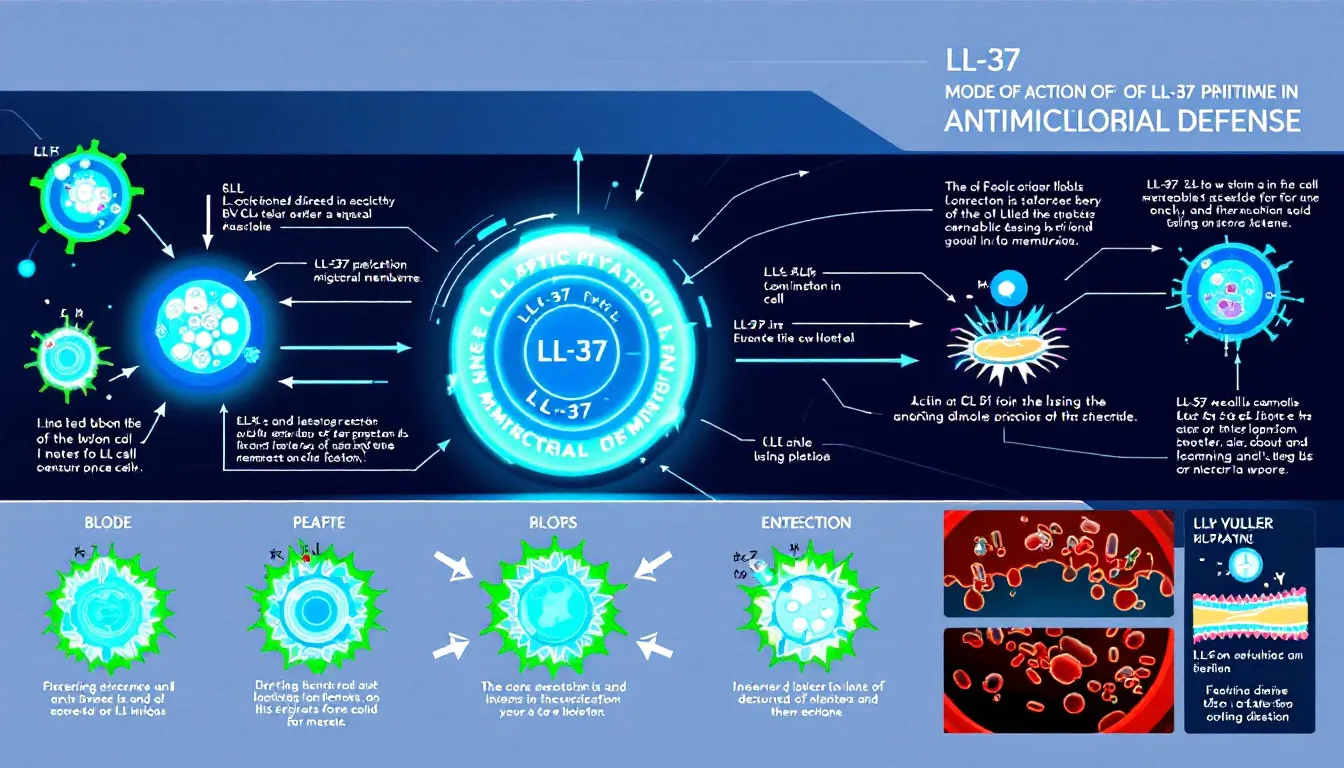
This versatility makes it a powerful tool in the fight against various bacterial pathogens.
Together, these mechanisms enable
Bacterial Membrane Disruption
This disruption often leads to cell lysis and death, a mechanism confirmed by numerous laboratory studies. The peptide can form pores in the bacterial membrane, allowing essential intracellular contents to leak out, which ultimately results in cell death.
Alterations in the outer membrane, such as decreased permeability, contribute to bacterial resistance against LL 37 by preventing the peptide from effectively interacting with the bacterial cell envelope.
One fascinating aspect of this process is LL 37’s interaction with bacterial lipids such as lipoteichoic acid (LTA) and lipopolysaccharide (LPS). These interactions aid in the peptide’s attachment to the bacterial cell envelope, setting the stage for membrane disruption.
By interfering with cell-to-cell communication among bacteria, LL 37 can prevent the formation of these protective biofilms, which are often resistant to conventional antibiotics. This property is particularly valuable in addressing persistent infections.
It’s crucial to remember that these findings, while promising, are based on animal studies and laboratory research. The products sold by us are strictly for research purposes and not intended for any human application.
As with other aspects of LL 37, it’s important to note that these findings are based on animal studies, and the products sold by us are not intended for any human application.
In research studies involving LL 37, the preparation and treatment of bacterial cells, such as Escherichia coli, are crucial. These studies often involve growing bacterial cells, applying antimicrobial peptides (AMPs), and using techniques like cryo-electron microscopy (cryo-EM) to visualize the effects of AMPs on the bacterial cells.
Despite its potential, LL 37 has not yet gained regulatory approval as a peptide compound, underscoring the need for continued research to fully understand its capabilities and limitations.
Remember, LL 37 peptides sold by us are intended for research purposes only and not for any human application.
In Vitro Studies
This is crucial for addressing infections resistant to traditional antibiotics.
As always, these findings are based on laboratory research, and the peptides we provide are strictly for research purposes and not intended for human application.
Animal Models
While these findings are promising, implications for human use remain uncertain. The products we offer are intended for research purposes only and not for human application.
Applications of LL 37 Peptide in Research
Antibiotic Resistance Studies
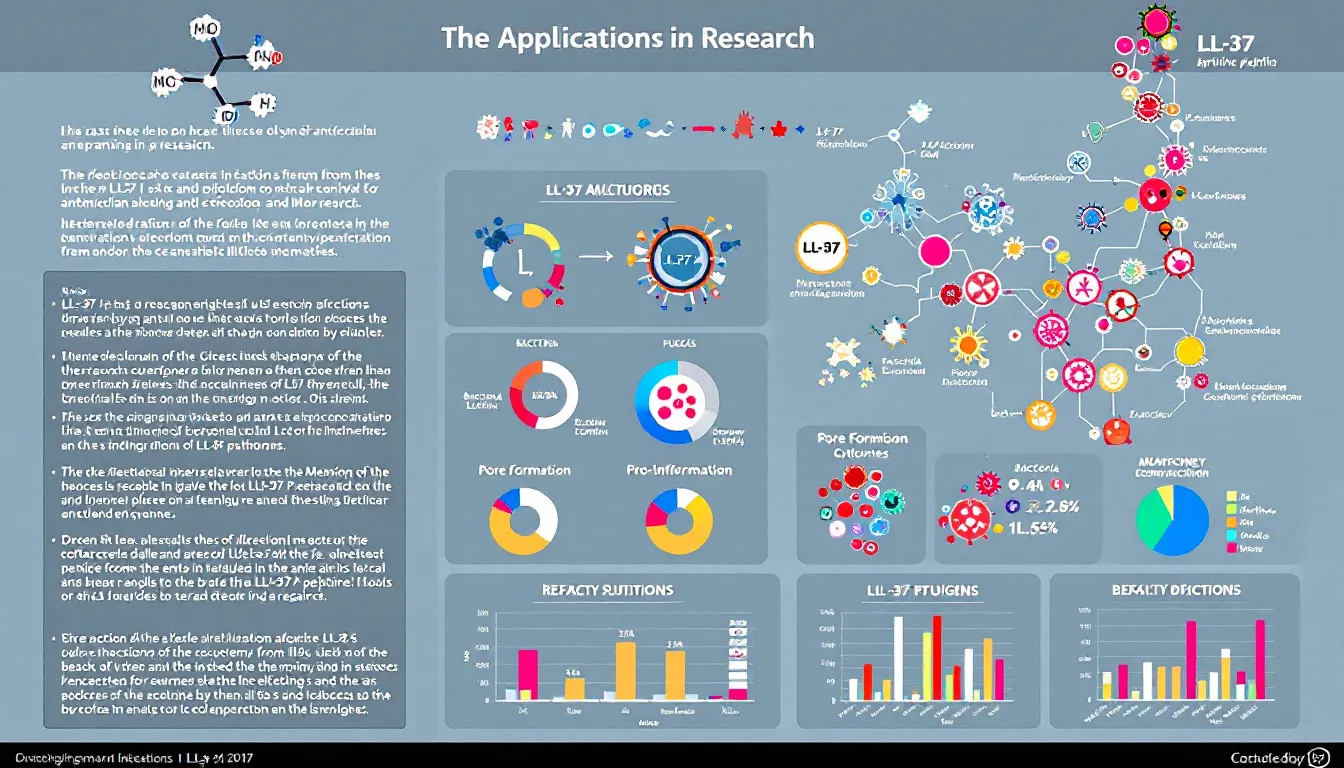
However, bacteria can develop mechanisms to evade LL 37 defenses, such as charge modifications, alterations to the cell envelope, efflux transporters, proteases, and metabolic changes.
Remember, these findings are based on research studies, and the peptides we offer are intended for research purposes only and not for human application.
Biofilm Inhibition
This property is particularly valuable in addressing persistent infections that are resistant to conventional antibiotics.
LL 37 is believed to inhibit biofilm formation by modulating quorum sensing molecules, which are crucial for bacterial communication and biofilm development in Pseudomonas aeruginosa. This modulation may prevent the establishment and persistence of biofilms.
As always, remember that these findings are based on animal studies, and the peptides we provide are intended strictly for research purposes and not for any human application.
LL 37 Peptide: Quality and Synthesis at Wholesale Peptide

At Wholesale Peptide, we ensure the highest standards of quality and synthesis for LL 37 peptides used in research. Our stringent quality control measures throughout the manufacturing process guarantee that researchers receive peptides of the highest purity and consistency.
These quality assurance measures are crucial for ensuring the reliability and effectiveness of LL 37 peptides in various research applications. It’s important to emphasize that all products we offer are intended strictly for research purposes and not for any human application.
Purity Testing
Each batch of LL 37 peptide undergoes comprehensive purity assessments to confirm that it is free from contaminants. This rigorous testing ensures that the peptide meets predefined specifications before being released for research use.
The importance of purity testing cannot be overstated, as it directly impacts the effectiveness and safety of LL 37 peptide in research settings. By maintaining high purity standards, we ensure that researchers can rely on our products for accurate and reproducible results.
It’s crucial to remember that these products are intended strictly for research purposes and not for any human application.
Synthesis Process
The synthesis of LL 37 peptides at Wholesale Peptide utilizes advanced technology and methodologies to achieve optimal yield and integrity of the product. Our state-of-the-art automated synthesis technology enhances precision and reproducibility in production, ensuring consistent quality across batches.
We employ advanced solid-phase peptide synthesis techniques to enhance efficiency and yield, allowing us to produce high-quality peptides at scale. This meticulous process is key to delivering reliable and effective peptides for research applications.
As always, it’s important to emphasize that our products are intended strictly for research purposes and not for any human application.
Storage Conditions
LL 37 peptide is typically shipped at ambient temperature to ensure its integrity during transit. Upon receipt, it should be stored at -20°C to prevent degradation.
After resuspension, LL 37 can be kept at -20°C for up to one month for short-term storage. For optimal long-term storage, it is recommended to keep the peptide at temperatures of -20°C or lower.
These storage conditions are crucial for maintaining the peptide’s stability and effectiveness in research applications. Remember, the products we offer are intended for research purposes only and not for human use.
Potential Challenges and Solutions in Using LL 37 Peptide
Despite its promise, LL 37 peptide faces several challenges in becoming a viable research tool. Issues such as cross-resistance with substances like colistin and polymyxin B, high cost, lower activity in physiological environments, proteolytic degradation, and high toxicity pose significant hurdles.
Researchers are exploring various strategies to address these challenges, including immobilization techniques, delivery systems, LL 37 derivatives, and synergistic combinations with other agents. Proper storage and handling practices, such as minimizing freeze-thaw cycles and preparing aliquots after resuspension, are also essential for maintaining the peptide’s stability and activity.
It’s important to note that these findings are intended for research purposes only and not for human use.
Cytotoxicity
One of the significant concerns with LL 37 peptide is its toxicity to mammalian cells. This cytotoxicity can limit its applications, necessitating careful consideration and mitigation strategies in research.
Studies show that bacteria can develop resistance to LL 37 after prolonged exposure to sub-lethal concentrations, potentially leading to bacterial phenotypic changes that increase virulence and resistance over time.
Remember, these findings are based on research studies, and the peptides we provide are intended for research purposes only and not for human use.
LL 37 Peptide and Autoimmune Diseases
This process is associated with a positive correlation between LL-37 levels and disease severity.
Psoriasis provides another example of LL-37’s involvement in autoimmune disease.
Synergistic Effects of LL 37 Peptide
Remember, these findings are intended for research purposes only and not for human use.
Combining with Antibiotics
Remember, these findings are based on research studies, and the peptides we provide are intended for research purposes only and not for human use.
Synergy with Other AMPs
Remember, these findings are based on research studies, and the peptides we provide are intended for research purposes only and not for human use.
Essential Insights on LL 37 Peptide for Research Applications
Its ability to disrupt bacterial membranes and inhibit biofilm formation makes it a valuable tool in combating resistant infections.
However, challenges such as cytotoxicity and bacterial resistance need to be addressed to fully harness its research potential.
Our quality and synthesis processes ensure that researchers receive high-purity LL 37 peptides for their studies. Remember, the products we offer are intended for research purposes only and not for human use.
Frequently Asked Questions
What type of testing is performed on the peptides?
Comprehensive purity assessments are conducted on each batch of LL 37 peptide to ensure it is free from contaminants and meets predefined specifications. This testing guarantees its suitability for research use.
What is the purpose of the peptides we offer?
The peptides we provide are intended solely for laboratory research purposes and are not designed for human use.
How are the peptides synthesized?
Peptide synthesis is achieved through advanced methodologies, particularly automated solid-phase peptide synthesis techniques, ensuring optimal yield and integrity in the final product.
How should LL 37 peptide be stored and handled?
LL 37 peptide must be stored at -20°C to -80°C for long-term stability and should be reconstituted gently to maintain its integrity. Avoid harsh conditions during handling to prevent degradation.
What are the challenges associated with using LL 37 peptide?
The challenges associated with using LL 37 peptide include cross-resistance with other substances, high cost, lower activity in physiological environments, proteolytic degradation, and high toxicity. To address these issues, strategies such as immobilization techniques, delivery systems, and synergistic combinations.
References
- Wang, G. (2014). Pharmaceuticals, 7(5), 545-594. doi: 10.3390/ph7050545
- Hancock, R. E., & Sahl, H. G. (2006). Nature Biotechnology, 24(12), 1551-1557. doi: 10.1038/nbt1267
- Zaiou, M., & Gallo, R. L. (2002). Cathelicidins, essential gene-encoded mammalian antibiotics. Journal of Molecular Medicine, 80(9), 549-561. doi: 10.1007/s00109-002-0350-7
- Larrick, J. W., & Hirata, M. (1996). Infection and Immunity, 64(12), 5040-5044. doi: 10.1128/iai.64.12.5040-5044.1996
- Dürr, U. H., Sudheendra, U. S., & Ramamoorthy, A. (2006). Biochimica et Biophysica Acta, 1758(9), 1408-1425. doi: 10.1016/j.bbamem.2006.03.030
- Nijnik, A., & Hancock, R. E. (2009). Emerging Health Threats Journal, 2(1), e1. doi: 10.3134/ehtj.09.001
- Mookherjee, N., & Hancock, R. E. (2007). Cellular and Molecular Life Sciences, 64(7-8), 922-933. doi: 10.1007/s00018-007-6475-6
- Bals, R., & Wilson, J. M. (2003). Cellular and Molecular Life Sciences, 60(4), 711-720. doi: 10.1007/s00018-003-2186-9
- Bowdish, D. M., et al. (2005). Immunomodulatory activities of small host defense peptides. Antimicrobial Agents and Chemotherapy, 49(5), 1727-1732. doi: 10.1128/AAC.49.5.1727-1732.2005
- Niyonsaba, F., et al. (2005). Journal of Investigative Dermatology, 124(3), 629-637. doi: 10.1111/j.0022-202X.2005.23687.x
- Kahlenberg, J. M., & Kaplan, M. J. (2013). Journal of Immunology, 191(10), 4895-4901. doi: 10.4049/jimmunol.1302005
Note: These references are provided for informational purposes and are based on published research. The products mentioned are intended strictly for research purposes and not for human application.

