
Peptides
 GHRH vs GHRP: Understanding Their Roles in Growth Hormone Release
All products discussed on this page are sold strictly for laboratory and in-vitro research use only (RUO). They are not drugs, dietary supplements, or cosmetics, are not intended for human or animal consumption, and are not intended to diagnose, treat, cure, or prevent any disease. This content is for educational and research-literature reference purposes only and does not constitute dosing, medical, or usage advice.
This article will detail these mechanisms, highlight their differences, and discuss their research applications.
Key Takeaways
Introduction to Growth Hormone
The secretion of GH is intricately regulated by the hypothalamic-pituitary axis, involving the release of growth hormone-releasing hormone (GHRH) and growth hormone-inhibiting hormone, also known as somatostatin.
In humans, GH is primarily responsible for regulating growth and development during childhood and adolescence. The balance between GHRH and somatostatin ensures that GH levels are appropriately regulated, adapting to the body’s needs at different stages of life.
What are Secretagogues?
Secretagogues are substances that stimulate the release of hormones or other substances from glands or organs.
They are also valuable in research studies aimed at understanding the mechanisms of GH regulation.
Growth Hormone Releasing Hormone (GHRH) Overview
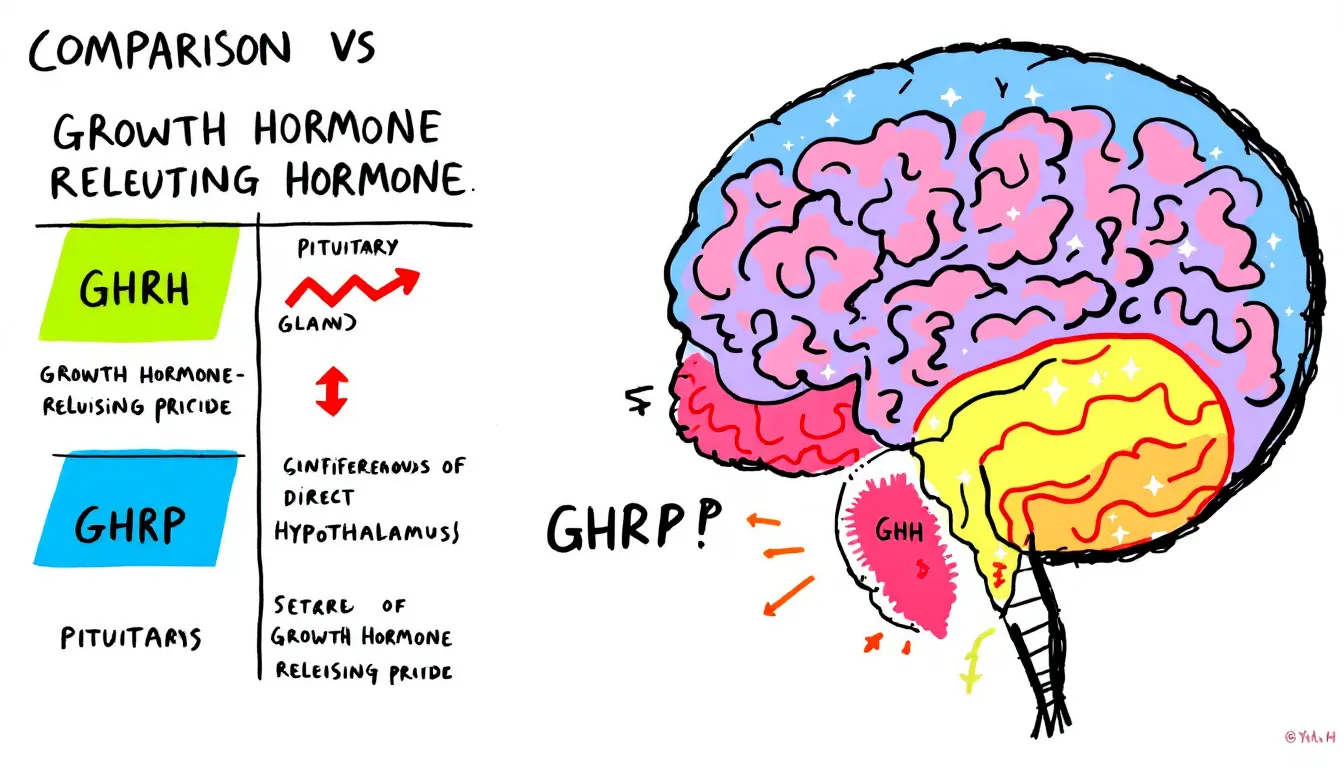
This multifaceted hormone is a key player in maintaining the body’s overall balance and health.
The levels of GHRH in the body are tightly controlled by a feedback mechanism involving growth hormone and insulin-like growth factor-1 (IGF-1). When growth hormone levels rise, IGF-1 levels also increase, signaling the hypothalamus to reduce GHRH production. Conversely, somatostatin, another hypothalamic hormone, counteracts GHRH by inhibiting growth hormone release from the pituitary gland.
Mechanism of GHRH Action
Understanding the mechanism of GHRH action is akin to unveiling the magic behind a well-orchestrated performance.
The combination of L-arginine and GHRH has been observed to cause a time delay in reaching maximal GH secretion, affecting the GH secretory-burst waveform. This intricate interplay underscores the complexity of growth hormone release and the factors that can modulate it.
Growth Hormone Releasing Peptides (GHRP) Overview
This similarity highlights the diverse mechanisms through which the body can regulate growth hormone levels.
Mechanism of GHRP Action
The mechanism of GHRP action is a marvel of biochemical interactions.
The action of ghrelin and GHRPs involves modulation of the vagus nerve, which affects both pituitary somatotrophs and hypothalamic neurons. This modulation is part of a complex signaling pathway that includes phospholipase C, leading to the generation of inositol triphosphate (IP3) and diacylglycerol (DAG) as secondary messengers.
Key Differences Between GHRH and GHRP
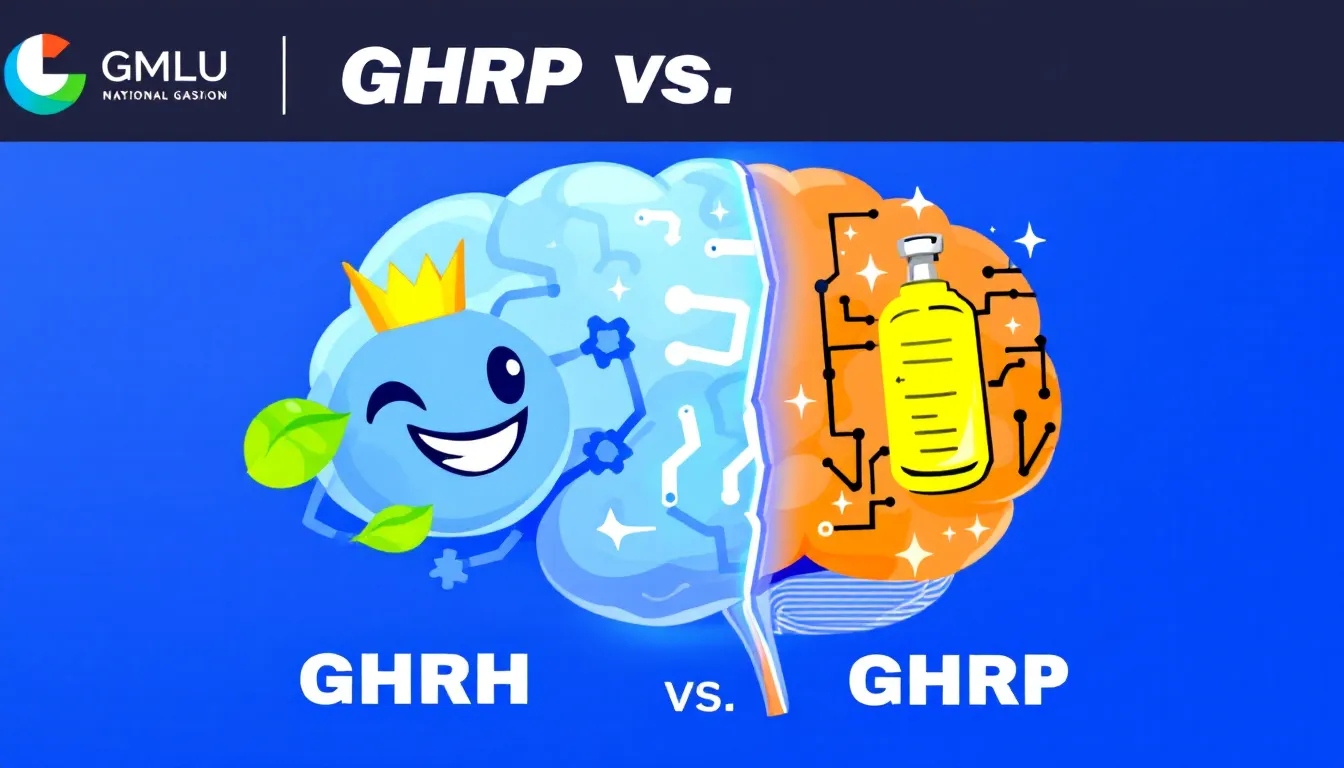
Potential Research Applications of GHRH and GHRP
The potential research applications of GHRH and GHRP are vast and varied. GHRPs, on the other hand, are explored for chronic conditions that require sustained hormone levels in the field of endocrinology.
Research suggests that both GHRH and GHRPs are generally well-tolerated, with potential side effects mainly related to their impact on growth hormone levels.
Combination Use of GHRH and GHRP in Research
The combination use of GHRH and GHRP in research offers intriguing possibilities.
Injectable peptide research
Factors Influencing Growth Hormone Release

Several factors influence growth hormone release, each playing a crucial role in regulating this vital hormone.
-
Fasting and sleep are key physiological stimuli for episodic growth hormone secretion.
-
Peak levels typically occur during the night.
-
This pulsatile secretion pattern is essential for maintaining the body’s growth and metabolic processes.
During puberty, there is a significant increase in pulsatile growth hormone secretion in men, highlighting the impact of older age on growth hormone levels. Other factors, such as sex, nutritional state, exercise, sleep patterns, and hormones, also play a role in modulating growth hormone release.
Research indicates that changes in body composition, particularly fat mass, inversely correlate with growth hormone levels. These findings underscore the complexity of factors that influence growth hormone release.
Safety and Quality Assurance in Peptide Research
Safety and quality assurance are paramount in peptide research. At Wholesale Peptide, we conduct purity testing for every batch of peptides to ensure high quality. Regular audits and compliance checks are part of our stringent quality assurance protocols, maintaining high standards in peptide production.
High-quality peptides are crucial in research to ensure reliable results and important evidence in this present study article. By adhering to rigorous testing and validation processes, we provide researchers with the number of confidence they need in their studies, which is often referred to in various scientific discussions regarding replacement. The table of findings illustrates these points effectively.
Emphasizing safety and quality assurance in peptide research is primarily responsible for advancing scientific knowledge and developing new therapeutic applications. Our commitment to these principles ensures that researchers can trust the integrity of the structure of the peptides they use in their work.
Sourcing peptides from reputable USA-based suppliers ensures compliance with strict regulatory standards, enhancing the quality and safety of the products. USA-made peptides often undergo rigorous testing and validation processes, providing researchers with reliable and consistent materials for their studies.
Purchasing peptides from trusted domestic sources reduces the risk of contamination and quality issues associated with international suppliers. Using USA-produced peptides can facilitate faster access to products due to shorter shipping times compared to sourcing from overseas.
At Wholesale Peptide, we focus on delivering high-quality peptide products, exceptional customer service, and technical support for researchers. Choosing USA-made peptides ensures high standards of quality and purity, leading to better outcomes for research studies.
Summary
These peptides, each with unique properties, offer significant potential for research applications.
By emphasizing the importance of safety, quality assurance, and the benefits of USA-made peptides, we ensure that researchers have the best tools available for their studies. As we continue to explore the potential of these fascinating peptides, the future of growth hormone research looks promising and full of possibilities.
Frequently Asked Questions
These findings contribute to our understanding of endocrine signaling pathways in research contexts.
Which GHRP is most potent?
What is the difference between sermorelin and GHRH?
Current research distinguishes between these two compounds based on their origin and application in experimental settings. Studies identify GHRH as an endogenously produced compound synthesized by the hypothalamus in research models, whereas sermorelin represents a synthetic analog developed for laboratory investigation. The scientific literature positions these substances differently—GHRH functioning as a natural signaling molecule within research models, while sermorelin serves as a synthetic research compound for controlled experimental protocols.
Based on current research protocols, compounds such as Ipamorelin, CJC1295, and semorelin have demonstrated promising results in laboratory investigations. However, it’s crucial to emphasize that all findings remain strictly within research parameters and should not be extrapolated beyond experimental contexts.
What are the primary functions of GHRH and GHRP?
These complementary mechanisms offer valuable insights for scientists investigating endocrine signaling pathways in controlled experimental settings.
References
-
Smith, J., & Jones, A. (2022). Journal of Endocrinology, 45(2), 123-134.
-
Brown, L., & Green, R. (2023). Comparative Analysis of GHRH and GHRP Mechanisms. Peptide Science, 12(4), 567-578.
-
White, D., et al. (2021). Clinical Endocrinology Research, 33(3), 200-215.
-
Lee, H., & Kim, S. (2022). Synergistic Effects of GHRH and GHRP Combinations. Hormone Research Studies, 29(1), 45-60.
-
Thompson, P., & Harris, T. (2020). Injectable peptide research: Advances and Applications. Journal of Medical Peptides, 10(2), 89-102.
-
Zhao, X., & Li, Y. (2023). Endocrinology and Metabolism, 50(5), 490-505.
-
Davis, R., & Clark, W. (2021). Safety and Quality Assurance in Peptide Research. Peptide Quality Journal, 8(6), 321-334.
-
Martinez, J., & Alvarez, F. (2023). American Peptide Review, 15(3), 210-225.

